


Most of the important things we do every day – standing, walking, running, lifting heavy objects – depend on the spine. As the main support for the body's movement, a healthy spine is naturally very important.
Spine Surgery can be divided into spinal injuries, spinal infections, spinal tumors, degenerative spinal diseases and spinal deformities. Three of these are currently the most common: spinal injuries, degenerative spinal diseases and spinal deformities.
For most patients, a spinal disease inevitably affects everyday life; in severe cases, patients may be bedridden or suffer severe pain.
Minimally invasive techniques in spine surgery
Spine surgery began in the early 20th century. Today, surgical techniques have evolved from conventional large-incision surgery to efficient minimally invasive techniques with fast recovery.
As a supplier of advanced medical equipment, Richard Wolf offers the minimally invasive instruments needed for spine surgery. These are common indications treated with minimally invasive techniques in spine surgery:
Herniated disc
A herniated disc is the most common condition in spine surgery – a spinal disease caused by degenerative changes inside the spine.
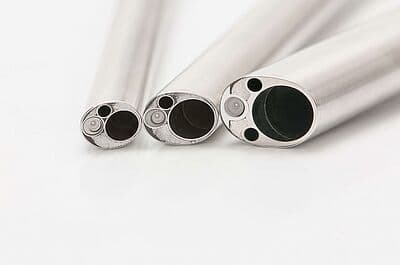
Among Richard Wolf spine surgery instruments, VERTEBRIS is the main instrument set for minimally invasive spine surgery and an advanced, highly efficient and precise system for treating herniated discs.
VERTEBRIS lumbar is designed specifically for full-endoscopic decompression of the lumbar and thoracic spine. Typical indications include herniated discs, spinal cysts and spinal stenosis.
Full-endoscopic surgery is possible through transforaminal, extreme lateral and interlaminar approaches. VERTEBRIS 4K endoscopes have excellent optical performance, ensuring a good view and precise guidance of instruments during surgery.
Spinal stenosis
Bony structures and ligaments of the spinal canal can compress the spinal nerves. By location, stenosis is classified as lateral (foraminal or lateral recess stenosis) or central. Foraminal stenosis compresses the nerve root and mainly causes radicular symptoms.
The main cause of foraminal stenosis is degeneration of the facet joints and pedicle bone.
Lateral recess stenosis compresses the traversing nerve root and the lateral part of the spinal cord and is caused by bony overgrowth in the lateral recess of the spinal canal.
Depending on its severity and location, central stenosis can compress the central and lateral spinal cord and the traversing nerve roots, so patients may have central or radicular symptoms.
Richard Wolf VERTEBRIS lumbar instruments allow individual surgical treatment of all three types.
Facet joint and sacroiliac joint syndrome
Facet joint and sacroiliac joint syndrome is a degenerative spinal disease. The VERTEBRIS nerve block system, which uses 4 MHz Radioblator radiofrequency energy to denervate the facet and sacroiliac joints endoscopically, provides a reliable overall solution.
Discogenic pain syndrome
As with facet and sacroiliac joint syndrome, degeneration of the intervertebral disc and loss of fluid from the disc (nucleus pulposus) cause the disc to lose elasticity and resilience, which can make the affected segment unstable.
Inflammation in this area stimulates pain receptors in the disc and causes chronic discogenic pain. The PERCULINE nucleo radiofrequency ablation system, developed by Richard Wolf specifically for disc ablation, uses 4 MHz radiofrequency technology to protect soft tissue effectively and reduce thermal damage.
For more details, find out more about spinal diseases and minimally invasive spine surgery instruments. You are also very welcome to contact us directly. For our locations in China, please visit:www.richard-wolf.cn/en/contact/sales-and-service-network/ and https://www.riwospine.com/en/.