Early diagnosis of tumors has always been a major challenge. Identifying tumors accurately and in time is crucial for better treatment results and patient survival. Yet conventional diagnostic methods still have limitations, especially for tumors in areas that are hard to see.
Conventional tumor diagnosis and the need for modern technology
In conventional tumor diagnosis, routine imaging such as X-ray, ultrasound, CT and MRI plays a key role in identifying the location, size and shape of tumors, helping to plan treatment and assess disease progression. However, these techniques may not offer enough resolution to detect very small tumors or early cancerous changes, especially when the tumor lies deep inside the body in areas that are hard to see.
In addition, when conventional diagnosis requires invasive tissue sampling, it causes patients extra pain and risk. As medical technology advances, physicians and patients increasingly want more advanced, more precise diagnostic techniques – with sharper images, more accurate tumor identification and more effective, comfortable, personalized treatment.
Innovation in endoscopic tumor diagnosis: System Blue
With the progress of medical technology, endoscopy has become an important tool for tumor diagnosis, with key advantages including:
Greater diagnostic precision:Endoscopy provides clearer, more detailed views than conventional imaging, so physicians can see the size, shape and location of tumors more precisely – especially deep inside the body where external examination cannot reach.
Early detection:Endoscopy helps detect tumors while they are still small or at an early stage, improving treatment success and patient survival.
Minimally invasive:Compared with conventional open surgery, endoscopy is usually minimally invasive, causing less harm to the patient's body, shortening recovery and reducing surgical risk.
Real-time biopsy:During endoscopy, physicians can take biopsies at the same time and obtain tissue samples for pathology immediately, improving diagnostic accuracy and speeding up diagnosis.
Technical progress:Modern endoscopes with HD camera heads, advanced imaging technology and improved operating systems make diagnosis more precise and efficient.
The System Blue platform components and how they improve diagnostic efficiency
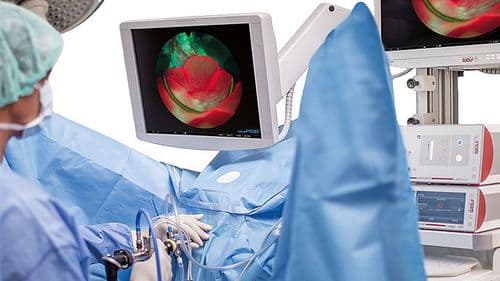
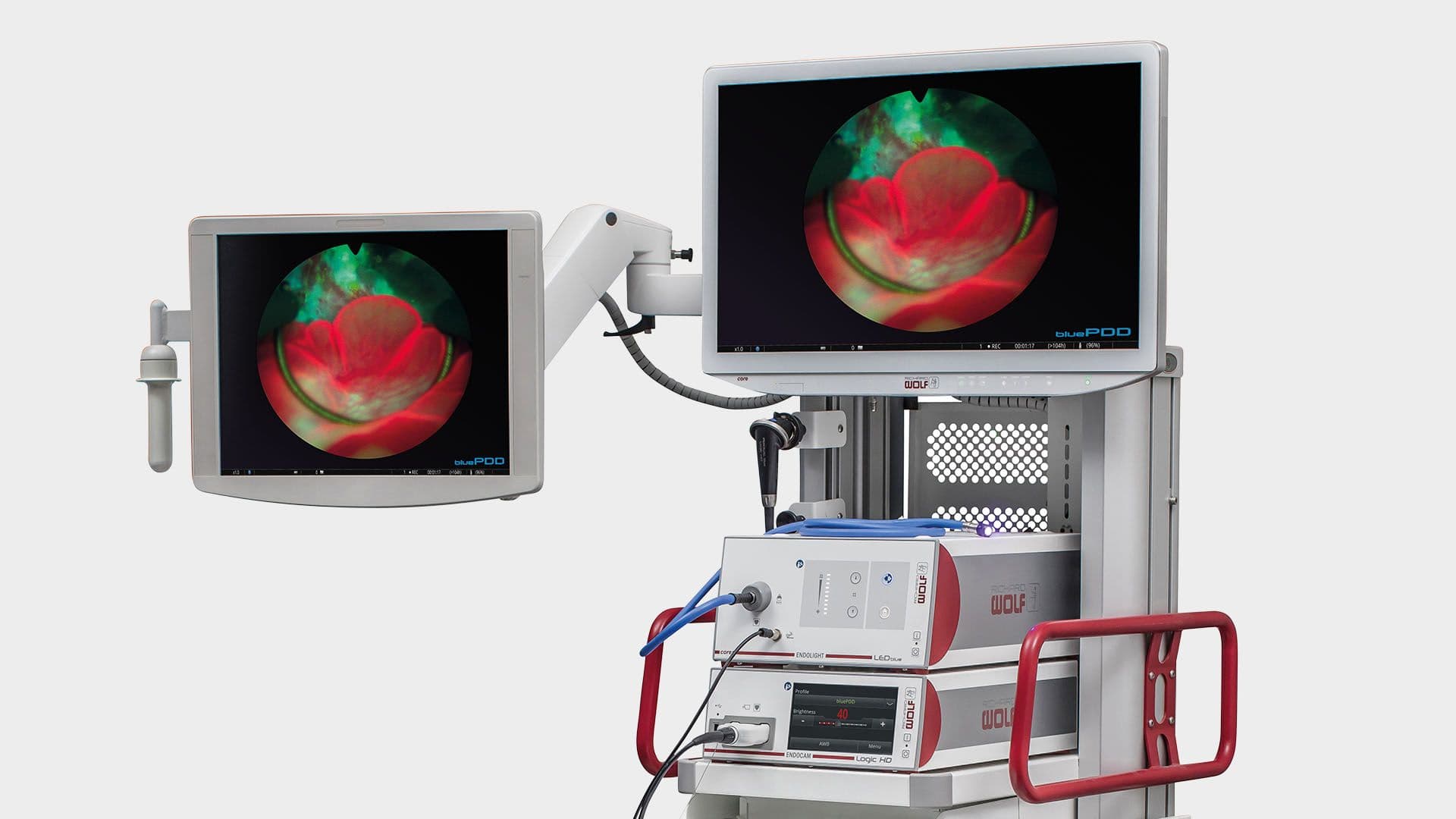
Against this background, Richard Wolf developed System Blue, opening up new possibilities for diagnosing tumors such as bladder cancer. Using advanced photodynamic diagnosis (PDD), this new, minimally invasive and efficient diagnostic method increases early detection rates while giving physicians a clearer, more precise view, effectively improving diagnostic accuracy and treatment results. Below, we describe the System Blue platform components and how they make tumor diagnosis more efficient.
ENDOLIGHT LED blue light source:
This innovative LED PDD light source provides very high color contrast, making the difference between tumor tissue and surrounding normal tissue more obvious. In PDD mode it provides stable illumination, helping physicians identify and completely resect tumors more precisely.
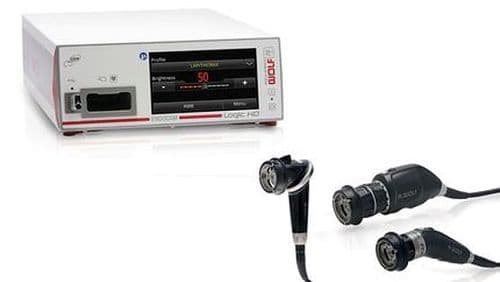
ENDOCAM Logic 4K camera controller:
The Ultra HD 4K camera controller offers two special imaging modes, bluePDD and bluePDD color contrast, which make tumor tissue stand out under blue light and greatly help physicians make a precise diagnosis.
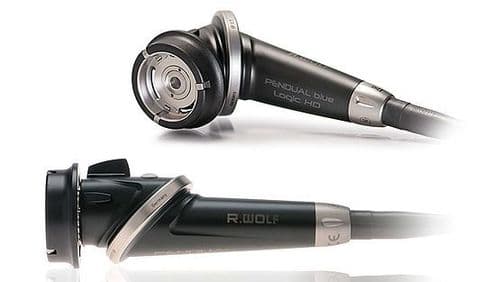
PENDUAL blue HD camera head:
A versatile Full HD camera head with advanced optical design and a very bright coupler system ensures sharp, bright images. It is suitable for all kinds of endoscopic procedures, including cystoscopy and resection.
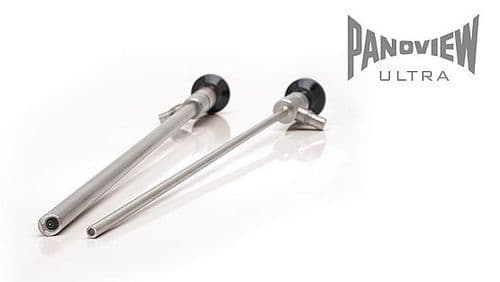
PANOVIEW blue telescopes:
An improved fiber design delivers brighter, more vivid images, supporting precise diagnosis in the complex environment of the bladder.
Together, these components improve the accuracy and efficiency of examinations. Especially in diagnosing tumors of the digestive and urinary tracts, clearer, higher-contrast images make it easier for physicians to find tumors and give patients more effective care.
Conclusion
Endoscopy – and Richard Wolf's System Blue in particular – has had a positive impact on tumor diagnosis, allowing cancer to be detected earlier and improving the chances of successful treatment and patient survival. Compared with conventional methods, the minimally invasive nature of endoscopy and its real-time biopsy capability also mean less pain and risk for patients and shorter recovery, bringing more hope for the future of cancer treatment.
For more information about System Blue or other Richard Wolf products, please visit the Richard Wolf China website or contact the Richard Wolf China advisory team.