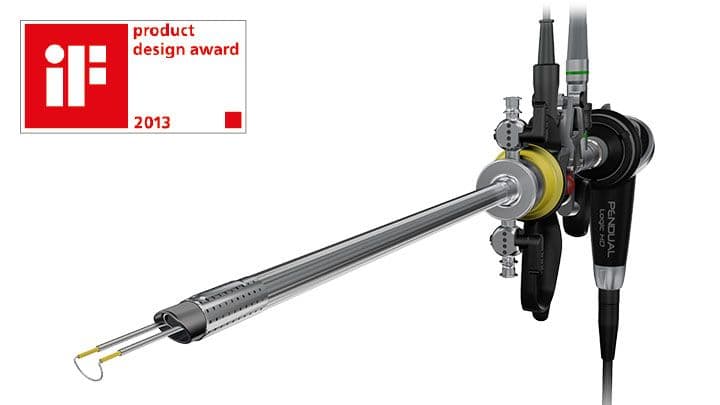
Of the prostate diseases most adult men face, the most common is benign prostatic hyperplasia (BPH), followed by prostatitis and prostate cancer.
Prostatic hyperplasia is a benign condition most men face from middle age onwards. Apart from the earliest open prostatectomy, resection with a prostate resectoscope is the current standard procedure.
For middle-aged men with benign prostatic hyperplasia, if the condition has not yet reached the stage where surgery is necessary, medication can be used to stop the enlargement.
If medication does not work, the only option is resection, enucleation or vaporization of the prostate using a resectoscope, laser or similar.
The classic procedure (TUR-P)
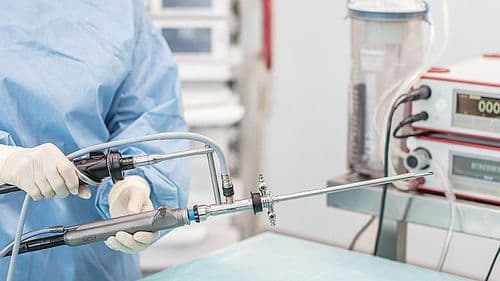
Transurethral resection of the prostate (TUR-P) is the classic procedure for this condition (BPE). A prostate resectoscope is passed through the urethra into the bladder to remove the part of the prostate causing symptoms.
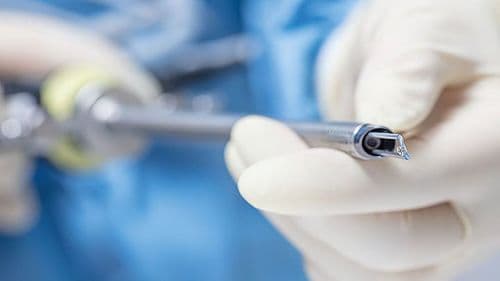
The prostate resectoscope is a type of endoscope with a surgical wire loop at its tip. Together with a medical-grade HD monitor and high-frequency current, it cuts tissue efficiently, and the tissue is finally flushed out of the bladder and urethra through the resectoscope.
After surgery, a catheter is left in the bladder to drain urine until the wound heals and the patient can urinate unaided. Most patients can leave hospital about three days after surgery.
Transurethral resection of the prostate is usually used for prostate volumes between 30 and 80 ml. For volumes over 80 ml, or for patients who also have bladder stones or bladder diverticula, most physicians use open prostatectomy.
The open incision is made in the lower abdomen rather than through the urethra as with a resectoscope, which increases the patient's pain and hospital stay.
New minimally invasive procedures for prostate enlargement
The prostate resectoscope has made an enormous contribution to treating this urological condition and is still in use today.
With advances in training and instrument technology, several new minimally invasive procedures for prostate enlargement have emerged, including those classified by the European Association of Urology as endoscopic enucleation of the prostate (EEP):
- Bipolar enucleation of the prostate (BipoLEP)
- Holmium laser enucleation of the prostate (HoLEP)
- Thulium laser enucleation of the prostate (ThuLEP)
- Advanced green light photoselective vaporization of the prostate (PVP)
These new procedures are not yet widely used, but physicians at some hospitals are already leading urology into innovative laser enucleation and vaporization. They greatly reduce pain and recovery time for patients with prostate disease, and shorter operating times, low blood loss and greater efficiency also lower the risk of recurrence.
Medical instruments and equipment from Richard Wolf
Beyond the strict demands prostate surgery places on surgeons, the special instruments resectoscopic surgery relies on are also very important: their quality, safety design and ease of use must all be of a high standard to ensure success.
Richard Wolf provides medical equipment and instruments for minimally invasive surgery that combine innovation and quality. Since 1906 the company has been dedicated to advancing medicine and technology, and its craftsmanship and quality are recognized throughout the medical world.
Richard Wolf is also a full-range supplier in urology with an extensive product portfolio. Here are some suitable surgical instruments:
ENDOCAM Logic 4K Ultra HD Camera System is Richard Wolf's Ultra HD medical camera system, with 4K resolution of 3840 × 2160 or 4096 × 2160 pixels – four times the current HD standard.
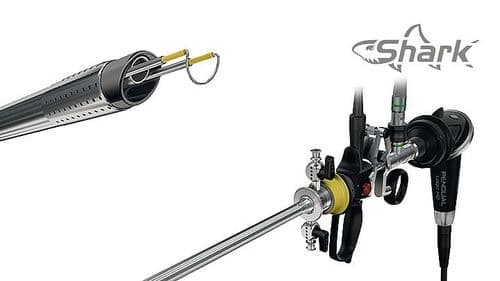
SHARK Resectoscope won the 2013 iF product design award. All components of the system use plug-in couplings for assembly and disassembly, making it easier for physicians to put them together.
High-efficiency morcellation system – PIRANHA completes the EEP treatment portfolio. With technology developed specifically by Richard Wolf, it morcellates tissue quickly and precisely.
Using the SHARK resectoscope together with the PIRANHA morcellation system reduces operating time and gives patients greater safety. At 1500 rpm, the PIRANHA Vmax blade cuts 93% more than a standard morcellator blade.
Visit www.richard-wolf.cn/en/disciplines/urology/surgical-techniques-in-urology/ to learn more about prostate resectoscopes, laser fibers and other instruments. You are also welcome to contact us directly. For our locations in China, please visit:www.richard-wolf.cn/en/contact/sales-and-service-network/.
Instruments and equipment for the new minimally invasive procedures
The prostate resectoscopes and laser fibers for these new procedures have only appeared in recent years, and major hospitals in China and abroad are currently training in, adopting and switching to the new minimally invasive procedures for prostate enlargement.
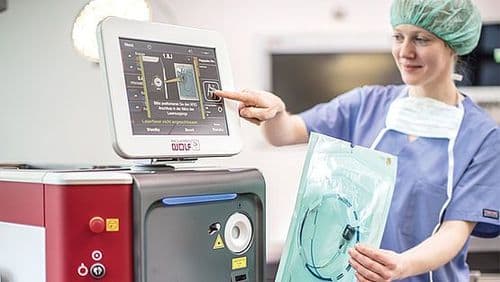
As a technology pioneer in medical instruments and equipment, Richard Wolf offers a wide range of the instruments and equipment these new procedures require, including: