Recommend this page
image

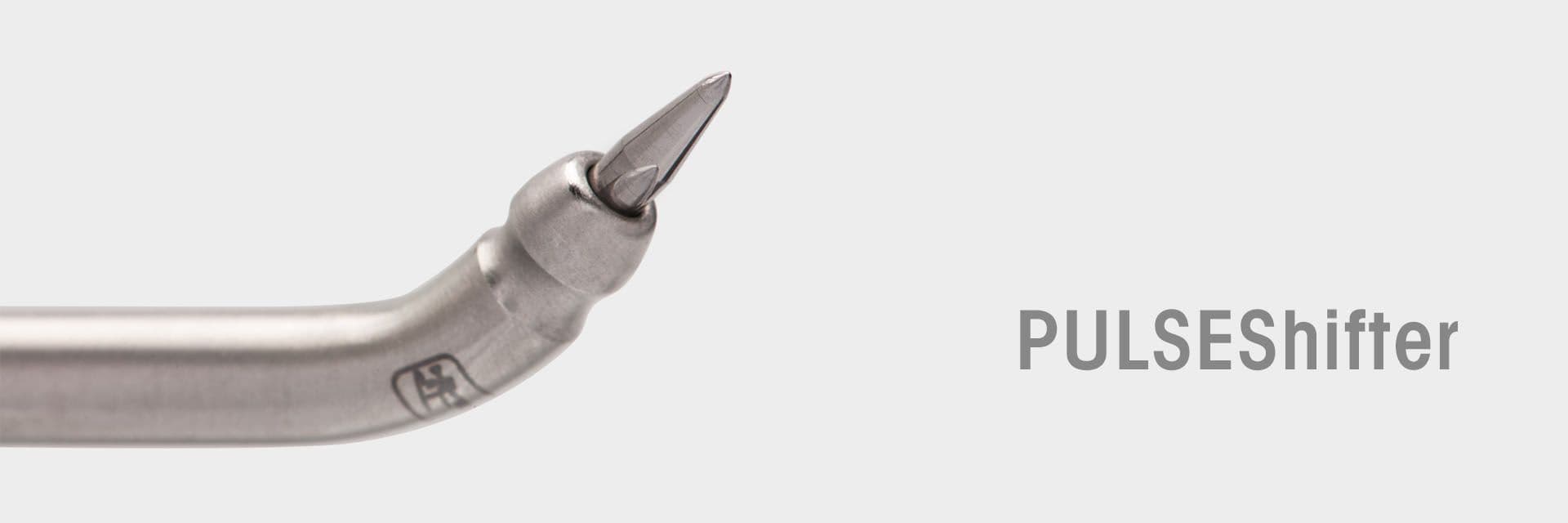
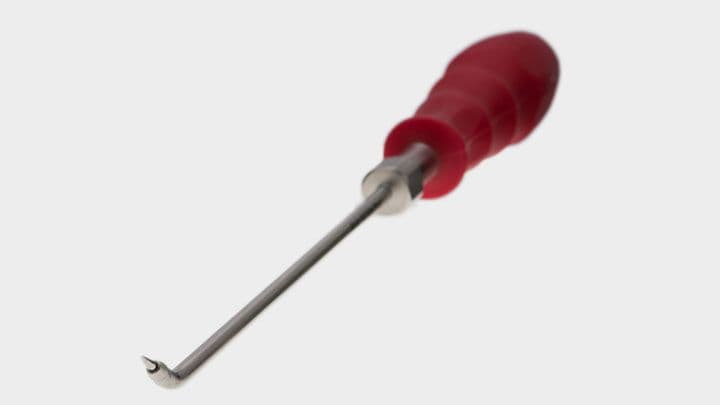
PULSEShifter Microfracture Instrument

Key points

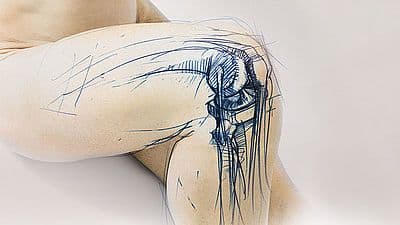
Alongside cartilage transplantation (mosaicplasty) and autologous chondrocyte implantation, microfracture is now a very common method of treating cartilage defects. A bone marrow stimulation technique, it is suitable for contained cartilage lesions extending down to the bone.

Because it is highly effective, this procedure is also used in hip arthroscopy.


However, the strong curvature of the hip joint often makes it difficult to direct the force applied to the tip of the microfracture awl perpendicular to the cartilage-bone surface. Yet this is necessary to keep the awl from slipping and damaging the surrounding cartilage, and to ensure sufficient penetration depth.
Advantages at a glance

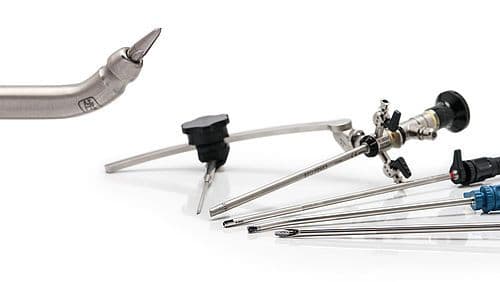
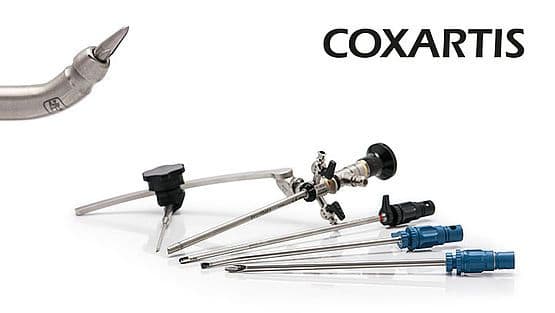
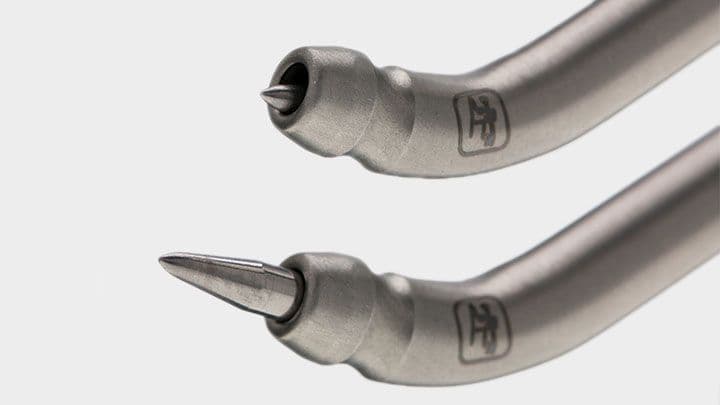
For microfracture surgery, we developed the PULSEShifter instrument with a patented technical solution to match the anatomy of the hip. It guides the impact impulse along a sheath that is angled (45°) at the distal end almost without loss and transfers it to the movable tip of the instrument.

  • Sheath and punch available as replacement parts
  • No electrical drive required
  • Reusable
  • Verified and validated reprocessing

Surgical procedure

The PULSEShifter is inserted into the hip joint through a half-pipe. To avoid injury, the movable tip of the awl is turned toward the half-shell. Inside the joint, the instrument is positioned with its tip on the cartilage defect perpendicular to the cartilage-bone interface, so that it can be hooked in place before microfracture.

The proximal end of the awl is then struck with a mallet, driving the tip into the cartilage defect to a penetration depth of up to 5 mm. The PULSEShifter is then hooked into place at a suitable distance for the next hole and struck again.

Technical data
Microfracture awl, working length 170 mm
PULSEShifter, curved 45°
Surgical Techniques
Downloads
Brochure
COXARTIS
4MB PDF
Catalog
Orthopedics
11MB PDF
Questions?We are ready to help!
Customer Service
hongkong@richard-wolf.com