Before the endoscope was invented, finding the cause of an illness was not easy. Until the 17th century, physicians could only guess at the cause by observing and touching patients and learning about their physical condition.
Later, the German physician Philipp Bozzini invented the world's first endoscope, for examining the female urethra and bladder. There were of course no HD camera systems then, so a candle served as the light source.
Today, surgery in established hospitals uses high-tech fiber-optic endoscopes together with HD camera systems.
At first, endoscopes were mostly used only for examination and diagnosis; only in the early 21st century were they gradually adopted for treatment and surgery. It took four whole centuries of development to arrive at today's 4K Ultra HD camera systems.
Using HD camera systems
The HD camera systems used in medicine today are complete systems made up of many devices and instruments.
Medical staff assemble the components each procedure needs, and during surgery the physicians and assistants responsible for each task operate the individual systems to examine, diagnose, treat and operate on the patient.
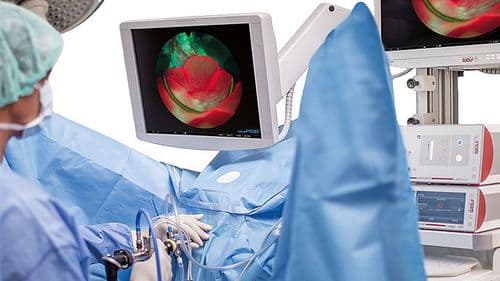
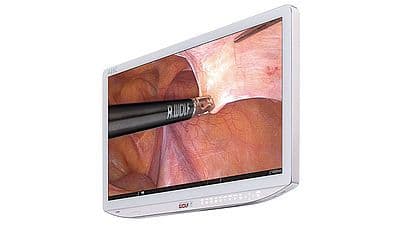
Connected to an HD camera system, the endoscope enters the patient's body through a natural orifice or a surgical incision. The HD optics show the internal view on an HD monitor, allowing the physician to operate precisely.
Examining and treating a wide range of diseases
HD camera systems are currently used mostly for examinations and surgery of the gastrointestinal tract, for example for chronic esophagitis, gastric ulcers, small bowel tumors and colorectal cancer. Pancreatic cancer, liver disease, respiratory disease and urinary tract examinations also rely on endoscopes combined with an HD camera system for examination and treatment.
Thanks to the rapid development of endoscopes across specialties, minimally invasive procedures are now widely used in medicine. For most diseases, physicians no longer need a large incision for open surgery.
Instead, they perform closed minimally invasive surgery with a range of instruments and an HD camera system.
This has brought historic progress in surgical efficiency and success rates.
Technological progress has spared people much of the pain of treatment and increased life expectancy, and HD camera systems play a central role in many areas of medicine.
Richard Wolf has made outstanding technical contributions in many fields, including complete Ultra HD camera systems.
Richard Wolf Ultra HD camera systems
Richard Wolf provides medical equipment and instruments for minimally invasive surgery that combine innovation and quality. Since 1906 the company has been dedicated to advancing medicine and technology, and its craftsmanship and quality are recognized throughout the medical world.
Richard Wolf is also a full-range supplier in urology with an exceptionally broad product portfolio.
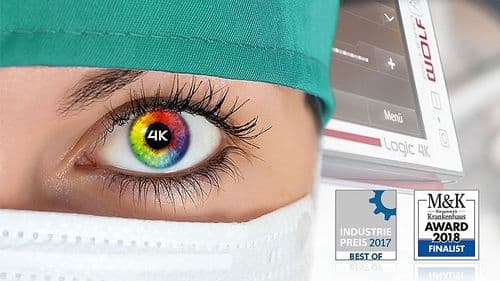
Richard Wolf's ENDOCAM Logic 4K Ultra HD Camera System takes endoscopic image quality to a new level, with a resolution of up to 4096 × 2160 pixels – four times the current HD standard.
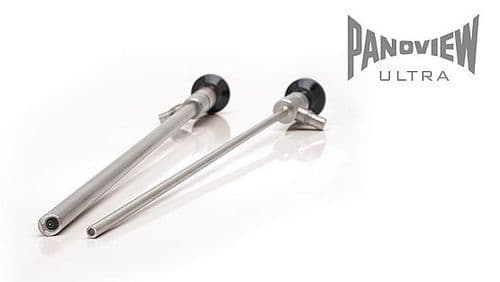
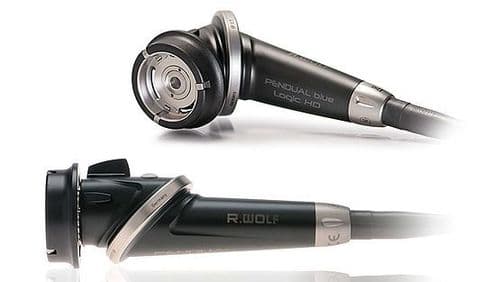
ENDOCAM Logic 4K Ultra HD camera system consists of 10 components: camera controller, camera head, objective, wide-angle HD telescope, Light Sources, light cable, Monitors、Reprocessing, keyboard and printer.
For details of the individual instruments and equipment, see the [Brochure】。
You are also welcome to visit www.richard-wolf.cn/en/solutions/imaging/endocam-logic-4k/ for operating videos of the ENDOCAM Logic 4K Ultra HD camera system and videos in which leading physicians from many fields assess Richard Wolf's Ultra HD camera systems.
You can also contact us directly. For our locations in China, please visit:www.richard-wolf.cn/en/contact/sales-and-service-network/ .